
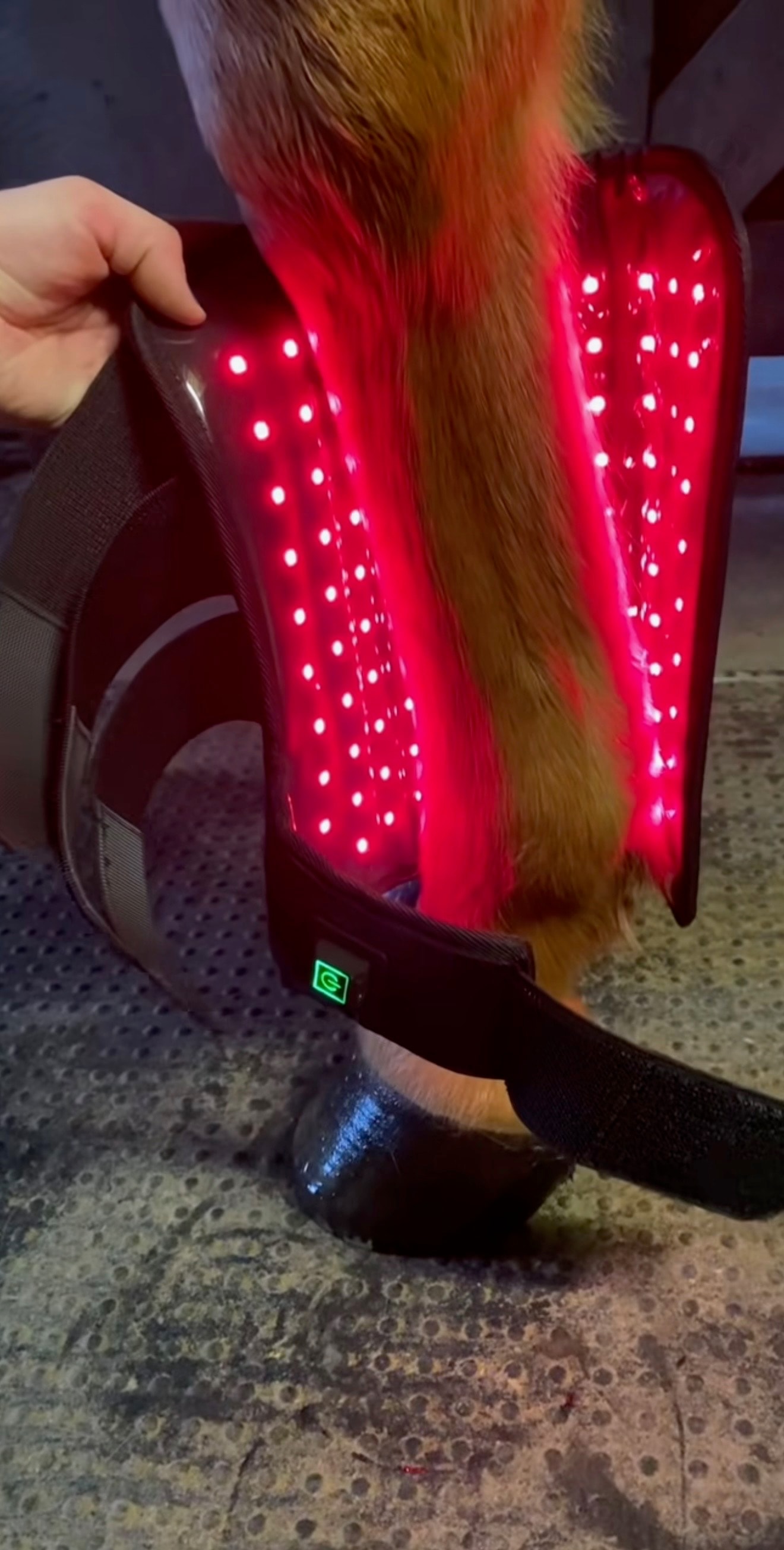
The science behind the results
How Red Light Therapy Works
Decades of research. Thousands of horses. One elegant solution.
Photobiomodulation
Light as medicine
Red light therapy — also called photobiomodulation (PBM) — uses specific wavelengths of light to penetrate deep into tissue, triggering natural cellular repair processes. It's non-invasive, drug-free, and backed by over 50 years of peer-reviewed research.
When applied to horses, these wavelengths stimulate mitochondria inside cells to produce more ATP — the energy currency that powers healing. The result is faster recovery, reduced inflammation, and measurable pain relief without side effects.
Two wavelengths. One powerful system.
Matricees devices combine 660nm red light and 850nm near-infrared light — the two wavelengths with the strongest clinical evidence for equine tissue repair.
Red Light
Penetrates surface tissue (0–10mm). Targets skin, wounds, and superficial muscle. Accelerates cellular regeneration and reduces surface inflammation.
Near-Infrared
Penetrates deep tissue (up to 40mm). Reaches tendons, ligaments, joints, and deep muscle. Reduces deep inflammation and promotes structural repair.
Cellular biology
What happens inside the cell
Light absorption
Photons from the therapy device are absorbed by cytochrome c oxidase — a key enzyme in the mitochondrial respiratory chain.
ATP production
Stimulated mitochondria produce significantly more ATP, giving cells the energy they need to repair, replicate, and function optimally.
Reduced inflammation
PBM modulates inflammatory cytokines, reducing chronic and acute inflammation without suppressing the immune response.
Tissue regeneration
Increased circulation and collagen synthesis accelerate the repair of tendons, ligaments, muscle fibers, and wounds.
Applications
Conditions commonly treated
Red light therapy is used by equine veterinarians, trainers, and owners worldwide for a wide range of conditions.
Getting started
How to use your Matricees device
Prepare the area
Ensure the treatment area is clean and dry. Remove any tack, wraps, or topical products from the target zone.
Position the wrap
Secure the therapy wrap snugly against the target area — joint, tendon, back, or muscle group. The LEDs should make full contact with the coat.
Set your session
Select intensity and timer on the control unit. Most sessions run 10–20 minutes. For acute injuries, start at lower intensity and increase over time.
Treat consistently
Results compound with regular use. Most horses show measurable improvement within 5–10 sessions. Maintenance sessions 2–3 times per week sustain results.
FAQ
Common questions
Is red light therapy safe for horses?
Yes. Photobiomodulation is non-thermal and non-invasive — it does not heat tissue or cause burns. It has been used safely in equine practice for decades and has no known negative side effects when used as directed.
How soon will I see results?
Many horses show visible improvement in comfort and movement within 3–5 sessions. Structural repair of tendons and ligaments takes longer — typically 4–8 weeks of consistent treatment.
Can I use it alongside other treatments?
Absolutely. Red light therapy complements veterinary care, physiotherapy, and other modalities. Always inform your vet of any treatments you're using.
How often should I treat my horse?
For acute injuries: daily for the first 1–2 weeks. For chronic conditions or maintenance: 3–5 times per week. Your device guide includes a full protocol chart.
Does it work through a winter coat?
Yes. Near-infrared light at 850nm penetrates effectively through a horse's coat. For best results with the 660nm wavelength, parting the coat or treating clipped areas improves surface absorption.
Ready to put the science to work?
The Matricees Equine Therapy Kit brings clinical-grade photobiomodulation to your barn.